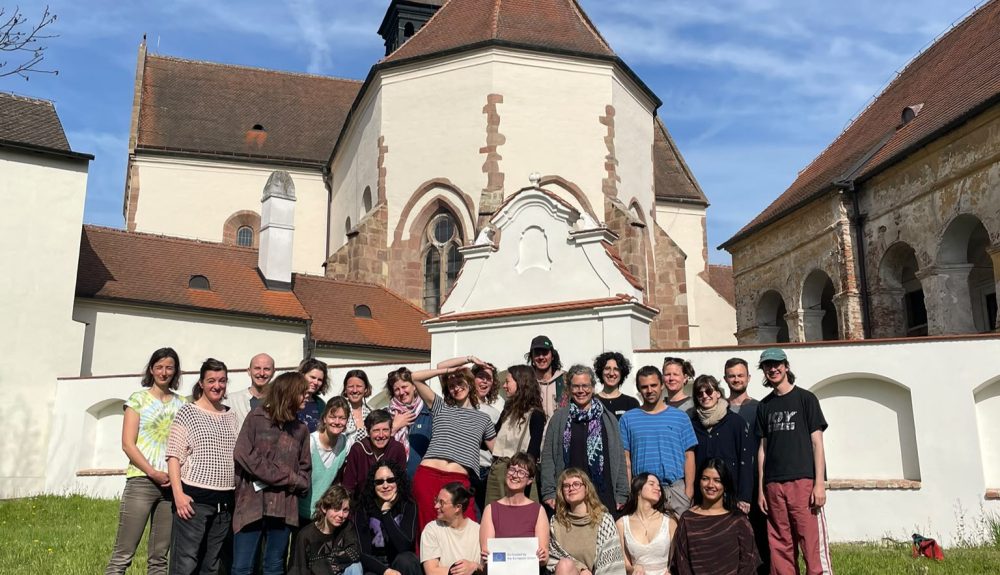
What does it take to educate for a world beyond economic growth? And how can we not only teach about a different future, but begin to practise it together? These were the questions at the heart of our ten-day Post-Growth Learning Lab.
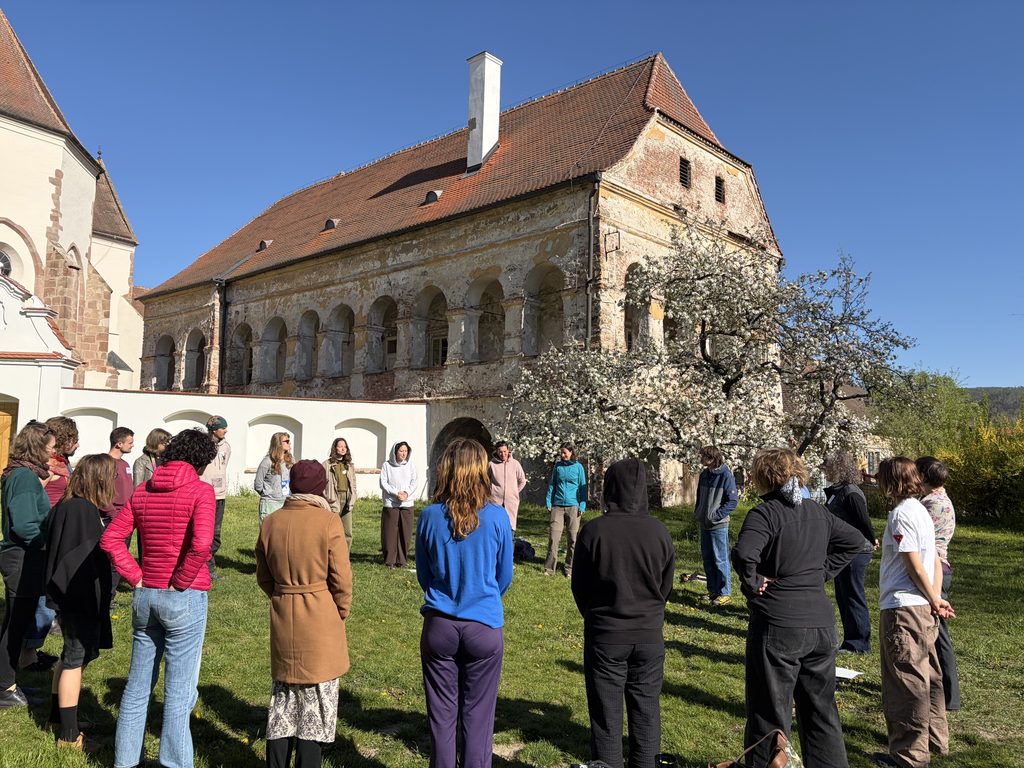
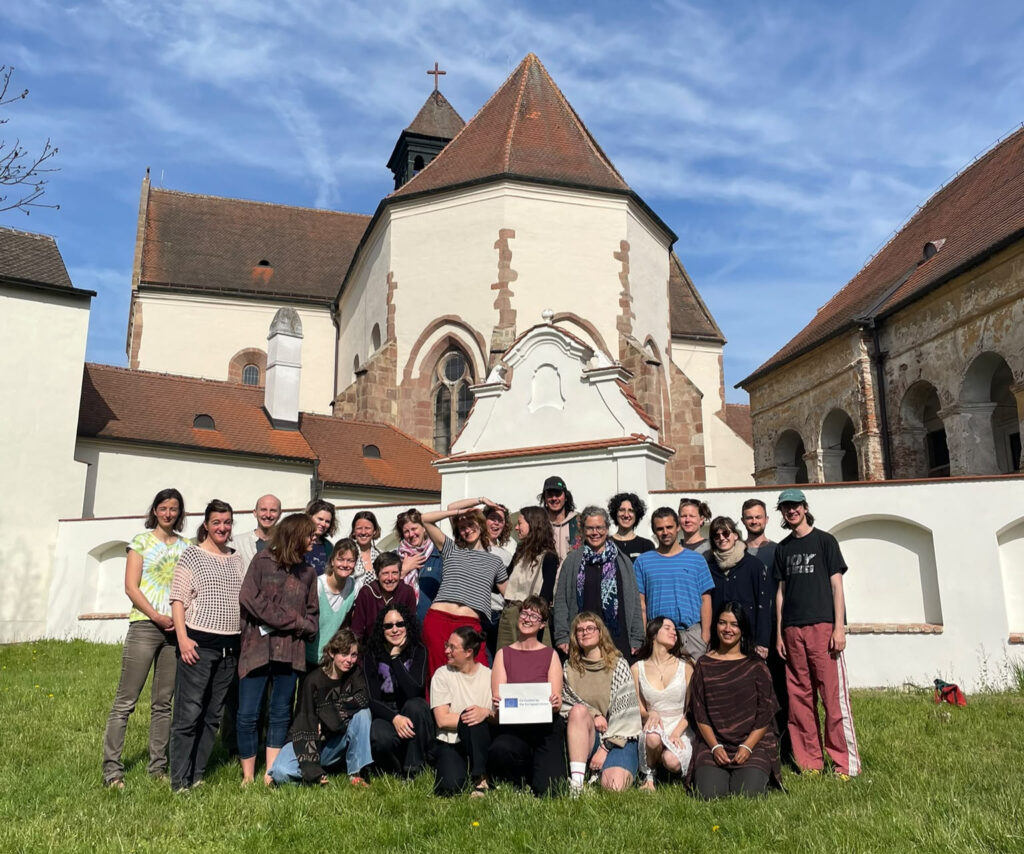
From 26 April to 5 May, we brought together 25 educators, youth workers and changemakers from across Europe. The training was organized by NaZemi and its Nerůst team, in cooperation with our international partners: Klíma ťa potrebuje (Slovakia), Konzeptwerk Neue Ökonomie (Germany), Tasaarengu Eesti / Degrowth Estonia (Estonia), Institut za političku ekologiju (IPE) (Croatia), Echo Collective (formerly Degrowth in Action, Spain), Shift Slow (Austria) and OtherWise Wageningen (the Netherlands). We gathered at NaNebi, a former monastery in the Czech countryside near Brno, to explore how we can bring post-growth ideas into education — and how we can embody these ideas in the ways we work, organize and relate to one another.
At NaZemi, we have spent years developing approaches to post-growth and transformative education. We see growing interest in visions of a society where everyone’s needs can be met within planetary boundaries. Yet much of the knowledge about how to get there remains within academic circles, rarely reaching the wider public or the world of non-formal education.
We wanted to help bridge this gap. Young people are increasingly concerned about ecological and social crises, but educational spaces often focus on individual behaviour changes without questioning the economic structures behind these crises. We wanted to equip educators with the knowledge, practical methods and confidence to open deeper conversations about systemic transformation.
Together with our international partners, all active in socio-ecological transformation, we created a space for exchanging experiences, questioning assumptions and developing new educational practices. The participants brought a remarkable level of curiosity, experience and commitment, which quickly turned the group into a vibrant learning community.
Three interconnected dimensions of transformation
We designed the programme around three threads: transforming economic systems, transforming culture and relationships, and strengthening the competencies of transformative educators.
Ten days gave us the time to explore these dimensions in depth, but also to understand how closely they depend on one another.
1. Outer transformation: Changing the economic system
We began by examining the foundations of our growth-dependent economy: its historical development, the critique of capitalism and the assumptions that make perpetual economic growth appear necessary or inevitable.
Using the Systems Thinking Iceberg, participants learned to look beyond visible problems to the patterns, structures and mental models that reproduce them. For example, rather than discussing unaffordable housing only as a problem of rising rents, we could investigate the institutions, ownership arrangements and beliefs that turn housing into an investment opportunity rather than a basic human need.
From critique, we moved towards envisioning post-growth futures and exploring alternatives to the status quo that already exist today.
We explored decommodification — the process of reducing people’s dependence on markets to meet their basic needs. What would it mean to organize access to housing, water, electricity or care according to people’s needs rather than their ability to pay? We examined concrete examples of how these services can be organized differently, opening conversations about public provision, commons and collective ownership.
We also looked at post-growth entrepreneurship. Can an enterprise operate without being driven by the constant need to expand and maximize profit? What difference do ownership structures, democratic governance and relationships to profit make? We explored alternative business models and cooperative ecosystems, including examples from Preston in the UK and Kerala in India.
Finally, we turned to strategies for systemic change. Drawing on the successes and failures of past social movements, participants compared three approaches: building alternatives within the existing system, pursuing structural reforms, and organizing collective pressure through social movements. Rather than searching for one perfect strategy, we explored how these approaches can reinforce one another — and where tensions between them might arise.
2. Inner and cultural transformation: Changing how we relate
Transforming institutions is essential. But what happens when we try to create democratic, cooperative alternatives while continuing to reproduce the same patterns of competition, domination and separation in our relationships?
This question guided the second thread.
We explored how the current economic system lives within us: in our habits, language, assumptions and ways of relating. For example, how often do we approach disagreements through either-or thinking, assuming that if one person’s needs are met, another’s must be sacrificed? How often do we struggle to ask for support because we have internalized the ideal of individual self-sufficiency?
Drawing on systemic approaches to Nonviolent Communication, the work of decolonial educator Vanessa Andreotti, and Joanna Macy’s Work That Reconnects, we examined the cultural foundations of a growth-oriented society and experimented with alternatives.
We explored how language can reproduce domination or open possibilities for partnership, and how recognizing needs beneath our strategies can help us move from conflict towards understanding.
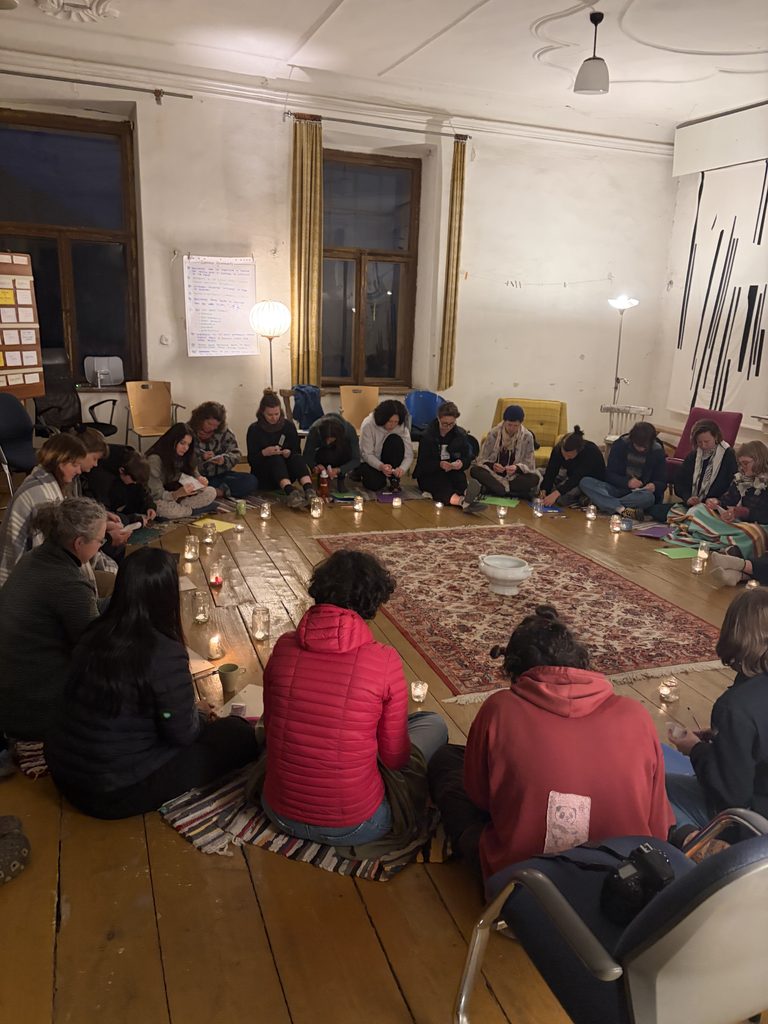
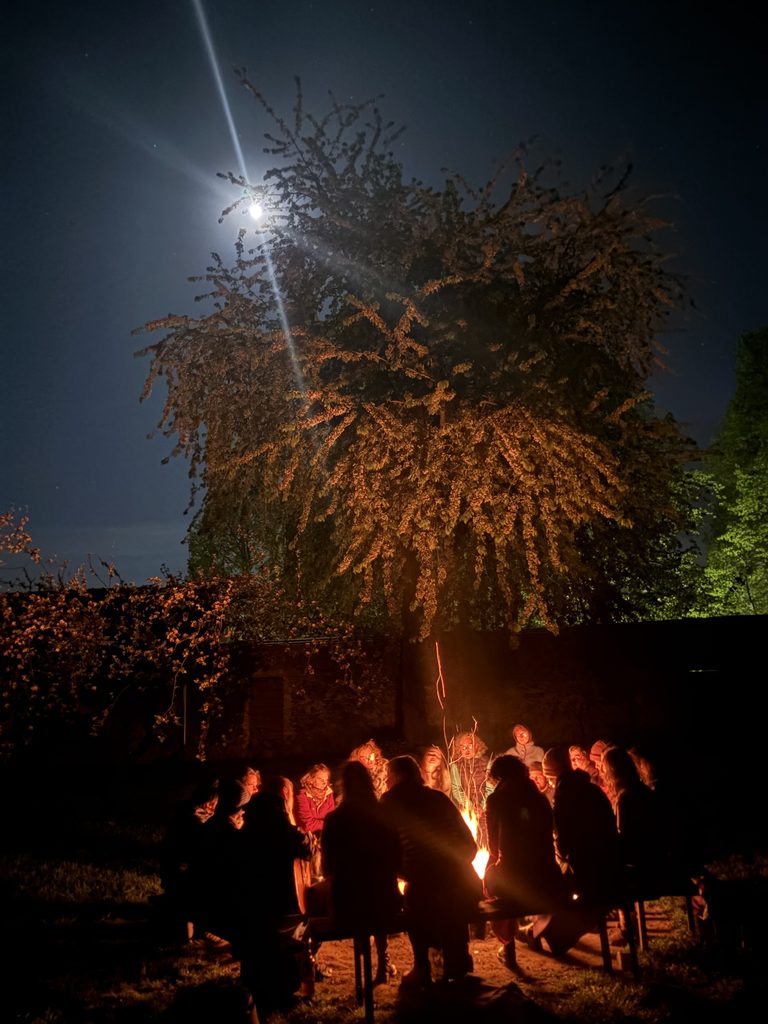
An especially meaningful experience was the Truth Mandala, a practice from Joanna Macy’s work. It created space for emotions that are often difficult to express in everyday life: grief, anger, fear and emptiness in response to the state of the world. Rather than treating these feelings as individual problems to overcome, we practised acknowledging and holding them collectively.
We also worked with self-management, democratic facilitation and power. How can we organize teams around needs rather than rigid hierarchies? How can we make decisions democratically without becoming stuck in endless discussions? How can we understand power not only as something oppressive, but also as a capacity we can share and exercise together — shifting from power-over towards power-with?
These questions were particularly relevant to educators and people involved in grassroots initiatives, who often find themselves navigating the gap between ambitious visions of cooperation and the everyday challenges of working together.
3. Transformative education: Learning how to facilitate change
The third thread connected everything back to participants‘ educational practice.
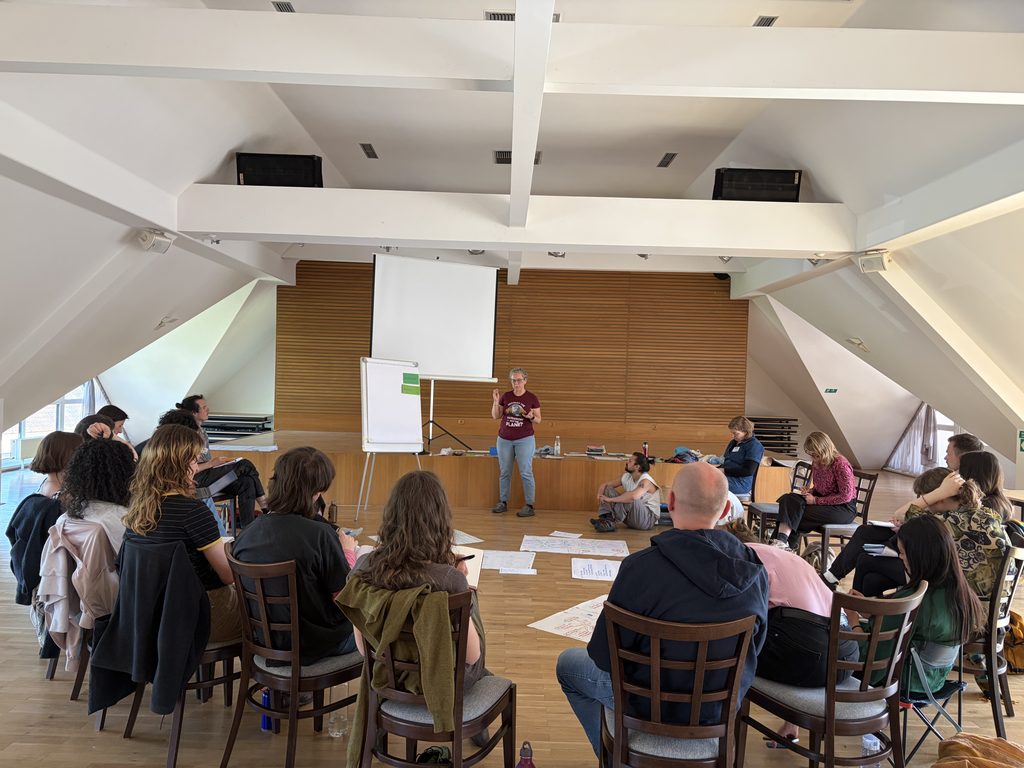
Throughout the programme, we did not simply experience workshops as learners. We regularly stepped into the perspective of educators, reflecting on why particular methods worked, what they made possible, and how they could be adapted to different groups.
Our approach was rooted in constructivist learning and the critical pedagogy of Paulo Freire, which sees education not as the transfer of knowledge from expert to learner, but as a dialogical process through which people develop their capacity to understand and transform the world.
We worked with key competencies of transformative educators, including developing critical consciousness, thinking systemically, imagining alternative futures, engaging learners‘ emotions, reflecting on power and facilitating democratic learning processes.
Through methodological debriefs, we examined concrete facilitation choices: how to ask questions that deepen reflection, how to create space for different perspectives, how to share responsibility for learning and how to support groups in moving from analysis towards meaningful action.
Towards the end of the training, participants began designing their own educational sessions inspired by the programme. Back in their home countries, they tested these approaches in their own contexts, bringing the learning into their organizations and communities.
We later reunited online to share what had happened: which methods worked, what proved challenging and how the experience continued to influence our work and personal lives.
Beyond the workshops: Living post-growth at NaNebi
An important part of the Post-Growth Learning Lab was that we did not want to only talk about transformation. We wanted to experiment with living it.
The setting played a significant role in making this possible. NaNebi is a community-run space that operates through self-management, volunteer involvement, DIY practices and relationships with local farmers. Rather than functioning as a conventional seminar centre, it offered a living example of some of the principles we were exploring: cooperation, sufficiency, shared responsibility and care.
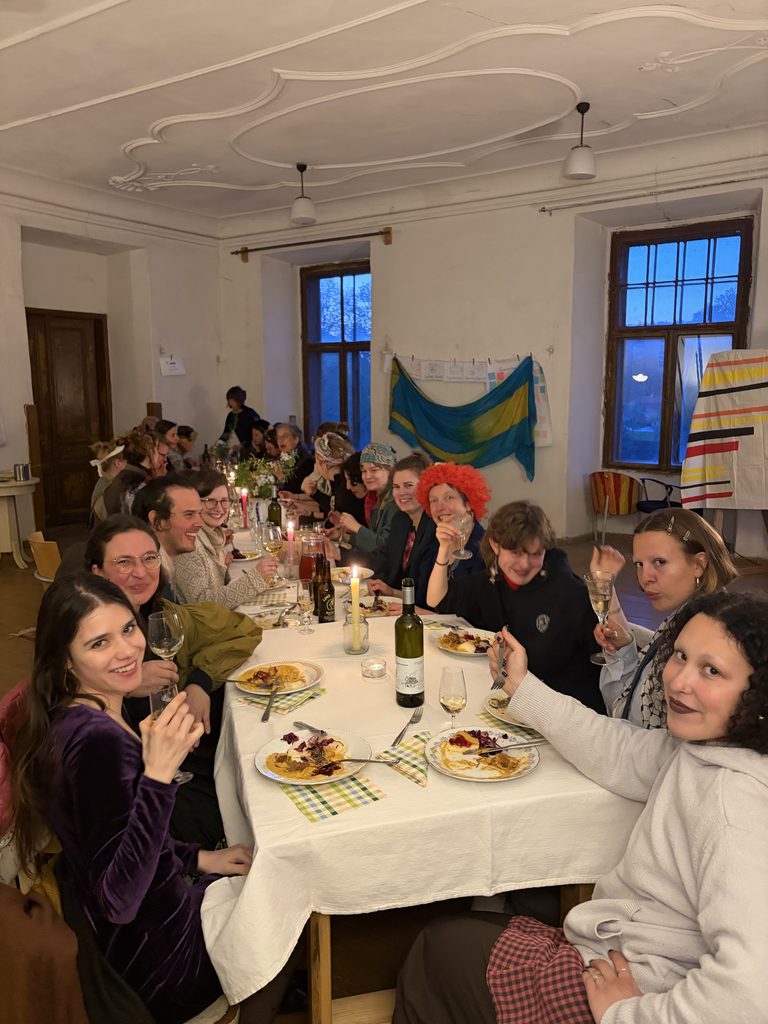
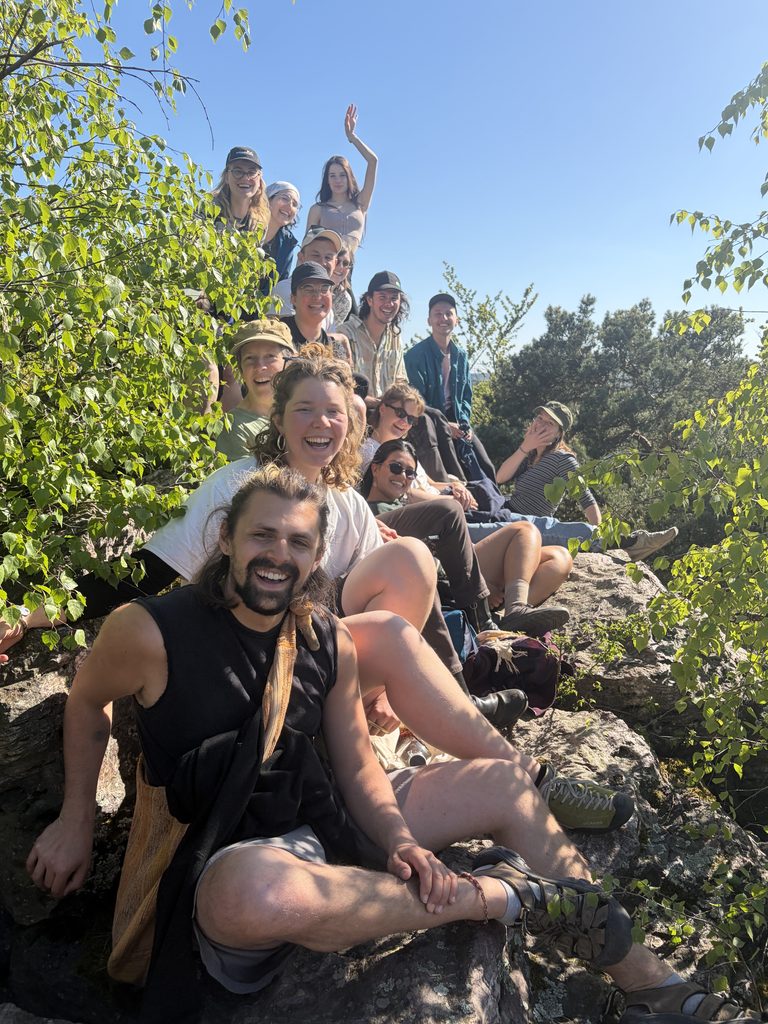
Throughout the ten days, participants took part in everyday work that makes community life possible. We shared reproductive work — the often invisible tasks of cleaning, maintaining shared spaces and caring for collective needs. We contributed to the place through practical work in the garden and orchard, spent time in nature, and learned through informal conversations as much as through structured workshops.
We also experimented with making decisions together, establishing shared agreements and addressing tensions when they emerged. This was not always straightforward, and that was precisely the point. Living according to different principles requires more than agreeing with them intellectually. It means practising new ways of sharing responsibility, communicating and navigating differences.
This everyday experience connected directly to the programme’s three threads. The discussions about decommodification and cooperative economies became more tangible in a place organized around collective contribution and local relationships. The work on needs, communication and power became relevant whenever we had to make decisions or navigate differences. And for educators, the entire experience became a lesson in how learning environments themselves can embody the values they aim to cultivate.
As one participant reflected:
„Speaking about the necessity of community, togetherness, emotions and needs and then actually living it made it not feel abstract but rather doable.“
This became one of the central insights of the Learning Lab: post-growth education becomes much more powerful when people can experience, even temporarily, what a different way of living and organizing might feel like.
From ten days of learning to a toolkit for educators
We wanted the learning from these ten days to reach beyond the 25 people who participated. One concrete outcome is our Toolkit for Post-Growth Educators, developed to make the approaches and methods accessible to others working in youth education, community initiatives and adult learning.
The toolkit introduces post-growth and transformative education, presents nine competencies of transformative educators, and offers three detailed workshop methodologies that participants found particularly valuable:
- Systems Thinking Iceberg — a method for looking beneath visible problems to the deeper structures and assumptions that reproduce them.
- Strategies of Transformation — an interactive workshop exploring how building alternatives, pursuing structural reforms and organizing collective pressure can contribute to systemic change.
- Post-Growth Entrepreneurship — a practical approach to examining how ownership, governance, profit structures and business practices shape the social and ecological impact of enterprises.
Each workshop includes facilitation instructions, reflection questions and guidance for adapting the methodology to different educational contexts.
[Download the Toolkit for Post-Growth Educators — PDF]
We see the toolkit not as a finished recipe, but as an invitation to experiment. We hope educators will use it, adapt it, challenge it and develop new approaches of their own.
What participants took away
The feedback we received was deeply encouraging, particularly because participants valued not only the knowledge and methodologies, but also the opportunity to experience post-growth principles in practice.
As Gael from Germany put it:
„This training might be one of the deepest on post growth in Europe.“
Leni from the Czech Republic highlighted the combination of practical learning and trust:
„The program offers a powerful combination of practical methods, inspiring content, and deep reflection.“
And Bobbi from the Netherlands reflected on how the experience influenced their professional practice:
„It has made me grow on so many fronts in parallel: as a facilitator, a workshop developer, a member of a collective, a strategist, and a thinker.“
For us, these reflections confirmed something important: transformative education is not only about helping people understand the need for change. It is also about strengthening their ability, confidence and relationships to participate in creating it.
What comes next? The Regenerative Leadership Learning Lab
We came away from the Post-Growth Learning Lab energized by the experience and motivated to organize more international exchanges.
The feedback also helped us recognize where participants saw the greatest potential for deeper learning. Sessions on systemic Nonviolent Communication, self-management, facilitation and working with power were among those they found especially enriching.
This inspired us to develop a new project: the Regenerative Leadership Learning Lab, dedicated specifically to the cultural and relational dimensions of transformation towards post-growth futures.
We have seen that many people working for socio-ecological change share compelling visions of more democratic, caring and cooperative societies. Yet translating these visions into everyday organizational practice can be surprisingly difficult.
Collectives may spend hours in meetings without reaching decisions. Attempts to avoid hierarchy can result in informal power structures that are harder to recognize or challenge. Conflict can remain unspoken in the name of harmony. And people committed to building a more caring world can end up exhausted by the very work they care about.
Creating alternatives does not automatically mean knowing how to make them work.
That is why we want to deepen the competencies that help people put their values into practice: communicating across differences, navigating conflict, working constructively with power, organizing through self-management, facilitating collective decisions and caring for individual and collective capacities in regenerative ways.
We see this as especially important for educators. The way we facilitate, make decisions, respond to tension and relate to learners is itself part of what we teach. If we want young people to imagine democratic and cooperative futures, we need to offer them experiences of what these relationships and structures can look like.
The Regenerative Leadership Learning Lab will build on this insight, helping educators integrate post-growth principles not only into their teaching content, but also into their professional practice, organizations and everyday lives.
The Post-Growth Learning Lab reminded us that the future we are working towards is not something we can only describe in books or imagine in workshops. We can begin experimenting with it in how we share work, make decisions, respond to conflict and care for one another.
Ten days cannot transform an economic system. But they can help people experience different possibilities, develop the skills to practise them and carry those experiences into the communities where they work.
And that is a meaningful place to begin.
The Post-Growth Learning Lab was organized by NaZemi and its Nerůst team together with international partner organizations, with funding from the European Union through Erasmus+.