
In recent years, the topic of post-growth and degrowth has experienced remarkable development. Hundreds of academic studies, research projects, and policy proposals have emerged, exploring pathways toward an economy capable of ensuring a dignified life for all within planetary boundaries. Yet this debate often remains confined to academic circles and only rarely reaches educational practice, public discourse, or work with young people.
It was precisely this gap between post-growth research and educational practice that we sought to help bridge through the project FutureShift: Post-Growth Transformative Education. The project was developed in cooperation between NaZemi and the Croatian Institute for Political Ecology (IPE), organizations connected by a long-standing partnership and a shared Central European perspective.
The project had two main objectives:
- to create high-quality educational methodologies on post-growth for non-formal education,
- to strengthen connections and exchange among people engaged in post-growth education across Europe.


New Methodologies for Post-Growth Education
The main outcome of the project is the publication Transformative Education for a Post-Growth Future: A Collection of Methodologies, produced in English, Czech, and Croatian.
In the end, we developed 10 educational workshops covering a wide range of topics related to post-growth transformation, including:
- systems thinking iceberg
- critiques of growth-oriented economics,
- the relationship between social justice and environmental sustainability,
- links between masculinity and growth ideology,
- decommodification and ways to ensure access to basic needs,
- post-growth policies,
- post-growth business models,
- cooperative and solidarity economy,
- strategies for societal transformation.
The methodologies combine principles of transformative education, systems thinking, futures literacy, and concrete case studies from different parts of the world. Our aim was to create materials that are practical, accessible, and easy to use for educators, even without prior knowledge of post-growth theories.
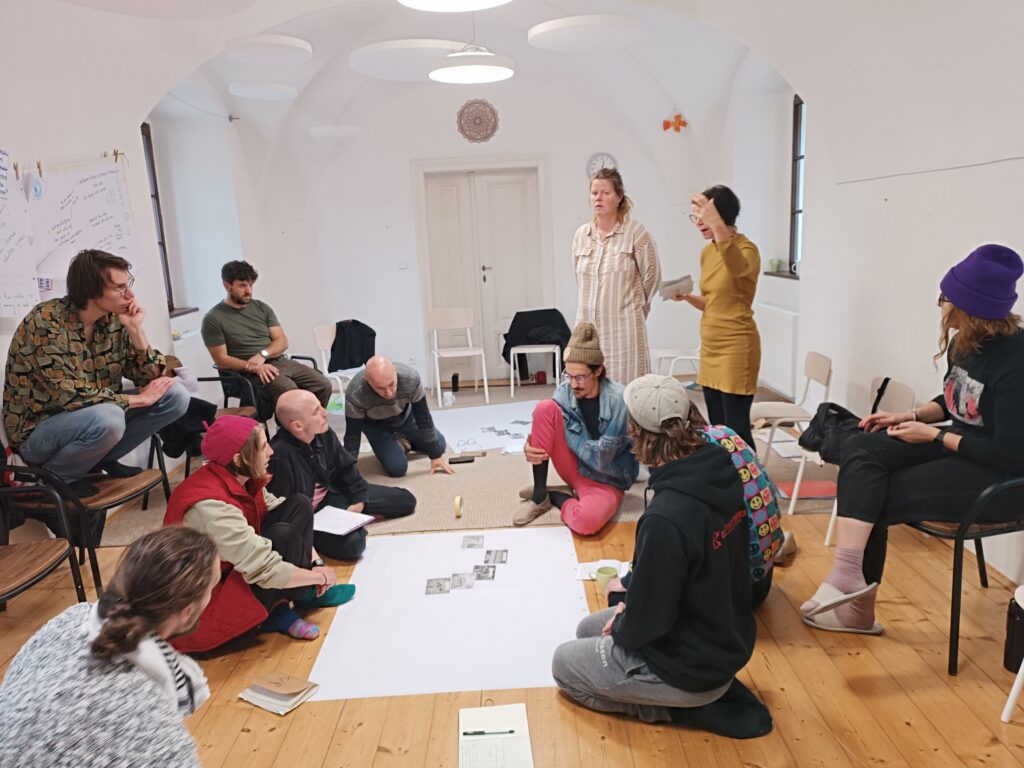
The methodologies were piloted in a variety of educational settings throughout the project. We used them, for example, during our Degrowth Summer Schools, workshops in Brno and Prague, discussions following film screenings, and events organized by our partners. More than 240 young people and adult participants took part in these workshops and pilot sessions. Feedback showed a strong interest in post-growth topics, with participants especially appreciating the connection between theoretical concepts and concrete examples and practical activities.
We believe that these methodologies will contribute to wider post-growth education in the Czech context—whether in Scouting, environmental education, non-profit organizations, or even secondary schools and universities, where growth-based economic approaches still dominate the curriculum.
Gathering of European Post-Growth Educators
The second part of the project focused on connecting people involved in post-growth education across Europe.
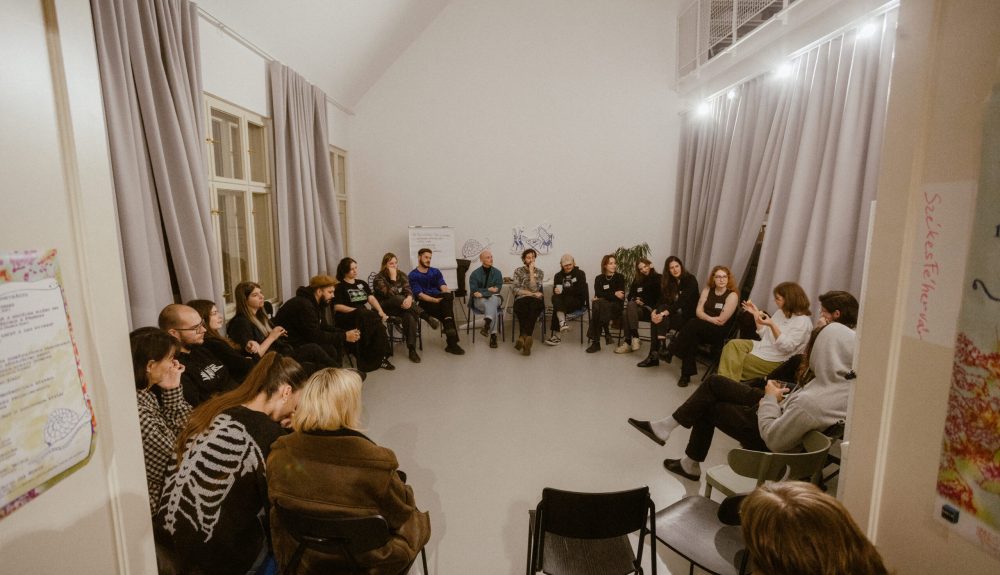
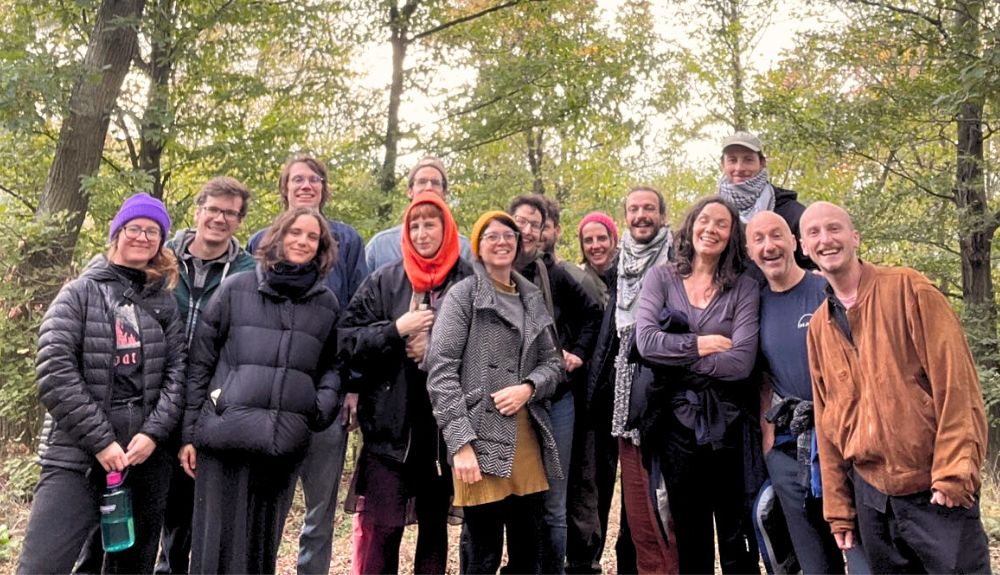
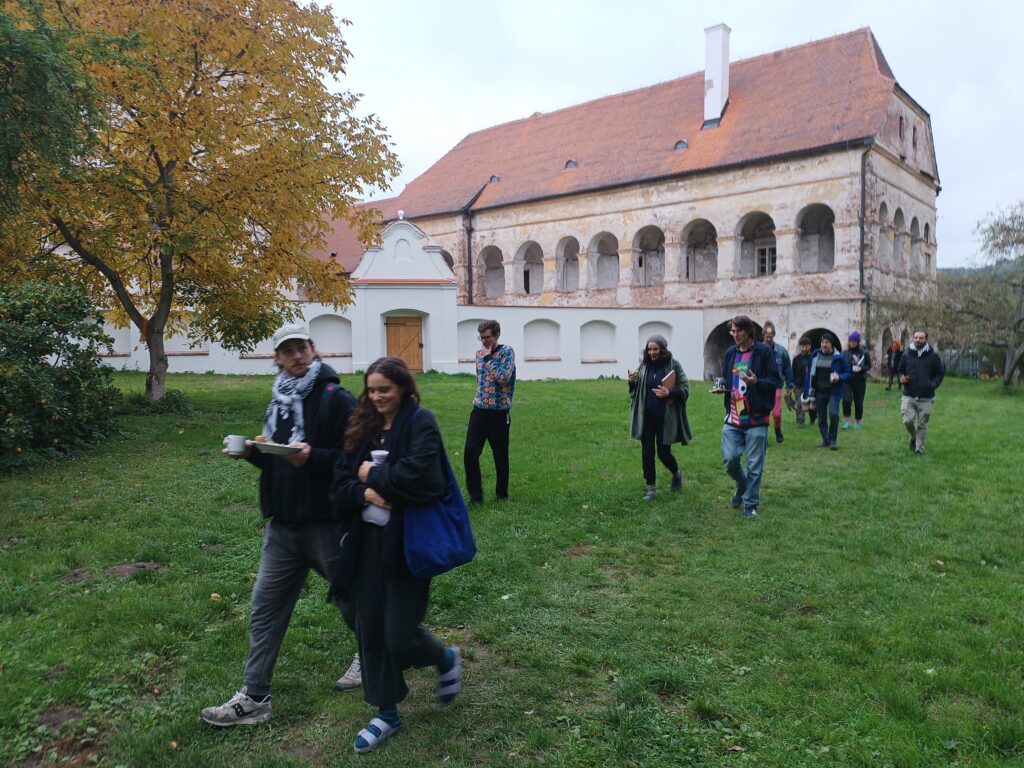
In 2025, we organized a nine-day Gathering for Post-Growth Educators at NaNebi, bringing together 16 educators from the Czech Republic, Austria, Germany, Hungary, Croatia, Belgium, Slovenia, Finland, Slovakia, and Spain.
The gathering was based on the principle of co-creation. Participants shared their own methodologies, educational approaches, and experiences working on socio-ecological transformation. This created space for deeper understanding, mutual learning, and relationship-building across countries and organizations.
We tested established methodologies while also experimenting with new ones. We were proud to introduce the international post-growth community to NaNebi, a space that embodies many degrowth principles in practice.
What Participants Said About the Gathering
“This was a precious opportunity to learn from each other across contexts and approaches. Not only do you get to experience the pluriversity of degrowth education programmes, it is also a rare chance to dive deeper with their authors. I left with a lot of inspiration and a renewed motivation.”
Ondřej, educator from the Czech Republic
“It is a rare opportunity to gather with others dedicated to a post-growth future, in a setting that embodies the principles. This is a unique space to learn about the many different ways degrowth and post-growth education is manifesting in the world, build and strengthen connections and feel the support from this growing family of practitioners.”
Inez, educator from Belgium
Thanks to the project, not only was a new set of educational methodologies created, but also the foundation of a European network of people who believe that education can help build a more just, democratic, and ecologically sustainable post-growth future.
You can read a detailed account of one the participants’ experience in one of his LinkedIn post.
Future Shift: Empowering Educators for Post-Growth Transformation was funded by the European Union through the Erasmus+ programme.